BLUE SCREEN, GREEN SCREEN, OR LED SCREEN?
6.5.2026
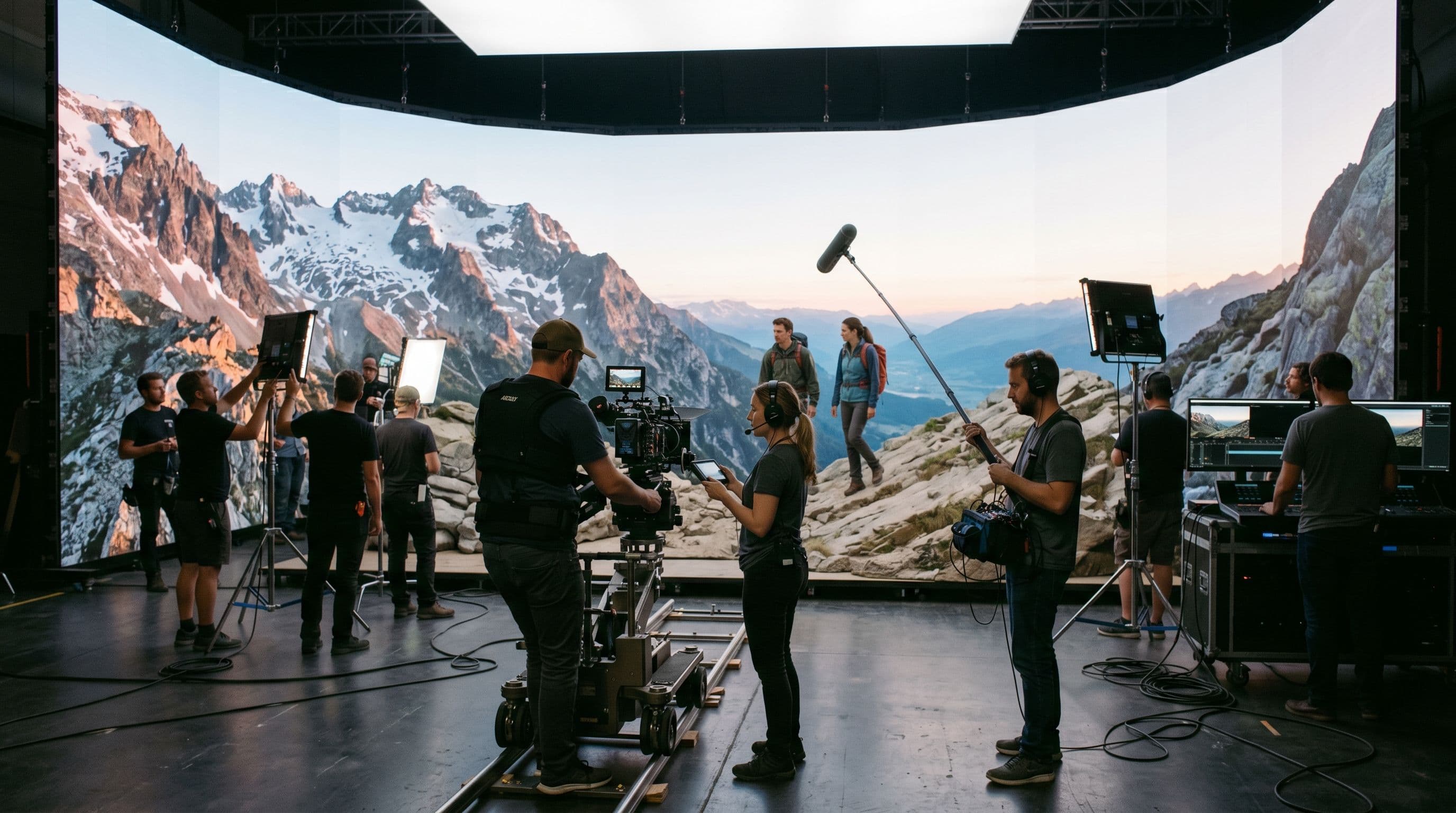
Modern video production offers more ways than ever to create controlled, cinematic and visually ambitious environments. A production no longer has to rely only on real locations. With blue screen, green screen and LED screen filming, brands, artists and filmmakers can build visual worlds around a product, performer or story.
But the question is not simply which technology is “better.” The real question is: which one is right for your specific project?
Each technique has its own strengths. Some are better for flexibility and post-production. Some are better for realism, reflections and immersive lighting. Some are more cost-efficient, while others require a bigger setup but deliver a more complete result directly on set.
When green screen is the best choice
Green screen is often the most practical choice when you need flexibility. It works well when the background will be fully replaced later in post-production, and when the subject does not contain too much green.
This is a strong option for interviews, social media videos, educational content, explainer videos, commercials, product presentations and music videos where the environment will be created digitally after the shoot.
Green screen is also useful when a project needs multiple background versions. For example, a brand may want the same presenter filmed once, then placed into different digital environments for different markets, platforms or campaigns.
It is usually more cost-effective than LED screen filming, but it requires proper lighting and clean post-production. If the green screen is not lit evenly, or if the subject has reflective materials, the editing process can become more complicated.
Green screen is a good choice when the priority is flexibility, budget control and the ability to create or adjust the background later.
When blue screen is the better option
Blue screen is often the better choice when green would interfere with the subject or the overall look of the scene.
If the person is wearing green, if the product packaging includes green, or if the set has plants or green design elements, a green screen may create problems during keying. In that case, blue screen can be a cleaner option.
Blue screen can also work better for darker, moodier or more cinematic visuals. It usually creates less aggressive color spill than green, which can be useful for reflective objects, hair, skin tones, metallic surfaces and certain fashion or product shoots.
For example, if you are filming a luxury product, a car detail, an artist in a dark outfit, or a cinematic music video with dramatic lighting, blue screen may give the post-production team more control and a more refined result.
Blue screen is a good choice when the project needs a cleaner key, less green spill, darker visuals or when green is already part of the subject.
When LED screen filming is the best choice
LED screen filming is the strongest option when realism matters directly on set.
Instead of replacing the background later, the digital environment is displayed on large LED screens during filming. This gives the production team, talent and director a much clearer sense of the final image while shooting.
This technique became widely known through productions like The Mandalorian, where LED walls were used to create immersive digital environments around the actors.
LED screen filming is especially useful when lighting and reflections are important. If you are filming a car, a glossy product, glass, metal, fashion pieces, or a performer in a highly atmospheric environment, LED screens can create natural reflections and real light interaction that are much harder to recreate with green screen.
It is also a strong choice for premium commercials, cinematic brand films, music videos, fashion campaigns, virtual locations and immersive experiences. The talent can react to the environment, the camera can capture much of the final look in-camera, and the creative team can make decisions live on set.
However, LED screen filming usually requires more preparation. The digital background has to be created before the shoot, the technical setup needs planning, and the production budget is usually higher.
LED screen filming is a good choice when the project needs realism, atmosphere, reflections, immersive backgrounds and a more finished image during production.
Blue Screen, Green Screen or LED Screen Filming: Which One Should You Choose?
When real locations may still be better
Even with advanced technology, not every project needs blue screen, green screen or LED screens. Sometimes a real location is still the strongest choice.
If the project depends on natural movement, real architecture, outdoor atmosphere, crowds, city texture or documentary-style authenticity, a real location may feel more believable and efficient.
For example, a lifestyle restaurant video, a travel-inspired campaign, a street interview or a natural daylight performance may work better in a real space than in a studio environment.
Virtual production is powerful, but it should not be used just because it looks impressive. It should be used when it supports the concept.
How to choose the right setup
The best choice depends on a few practical questions.
If you need a flexible and cost-conscious setup, green screen is usually the safest option.
If the subject includes green, reflective materials or darker cinematic visuals, blue screen may be the smarter choice.
If you need realistic lighting, reflections, immersive environments and a premium in-camera look, LED screen filming is often the strongest solution.
If the story depends on real atmosphere and natural imperfections, a real location may still be the best option.
The right production method should always come from the creative goal, not the technology itself.
Choosing the Right Production Setup with MEVIA Production
At MEVIA Production in Dubai, we help brands, artists and filmmakers choose the production method that best supports the creative idea. Depending on the project, this may involve green screen, blue screen, LED screen filming, virtual production or a real location.
Our team can manage the process from creative development and pre-production to filming, visual content creation and post-production. Rather than using technology simply for effect, we build each setup around the story, product and final platform. Whether the goal is maximum flexibility, realistic reflections, a cinematic virtual environment or a polished commercial look, MEVIA Production develops the right production workflow to bring the concept to life.