HOW CGI AND 3D HELP BRANDS GO VIRAL
16.12.2025
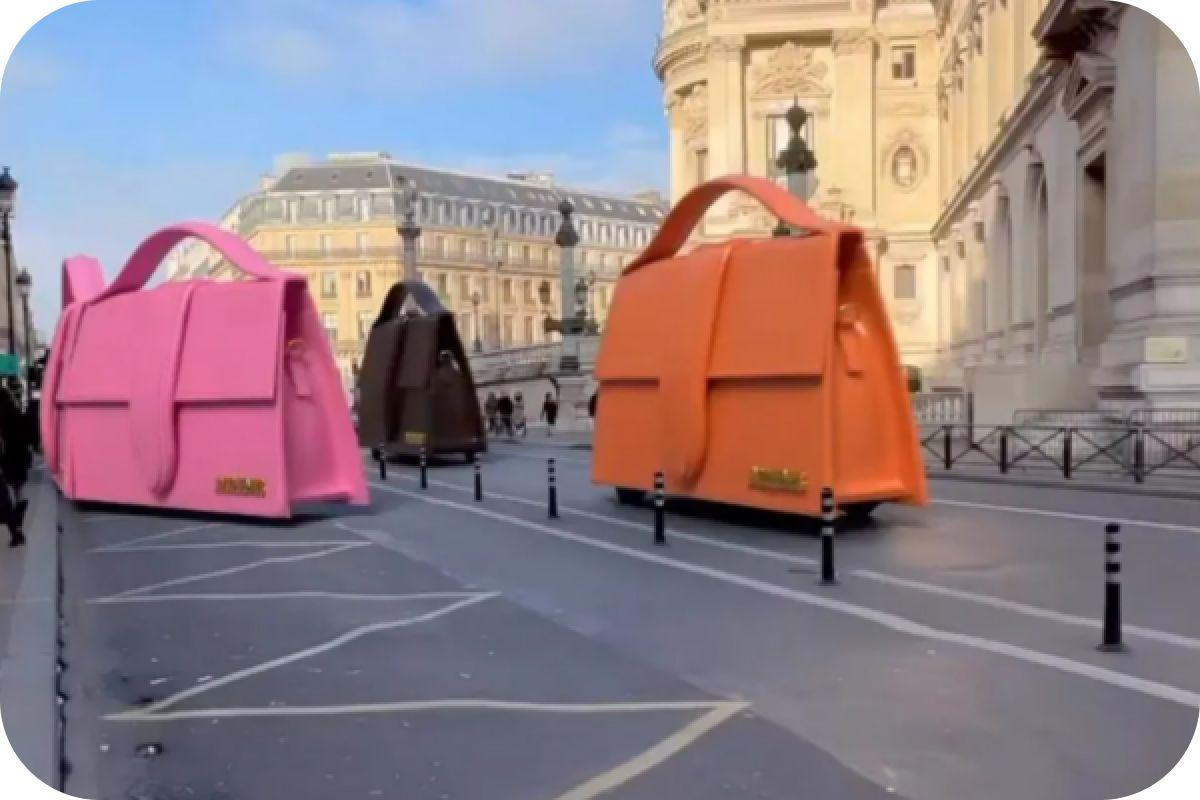
By now, CGI and 3D are no longer just “extra” creative tools. They have become a real part of how brands compete for attention online. When used well, they can turn an ordinary campaign into something people stop for, replay, send to friends, and repost with comments like “wait, is this real?” That reaction matters, because on social media, curiosity is often the first step toward reach. Recent brand examples like Maybelline’s viral CGI mascara activation in London and Jacquemus’ oversized bag videos in Paris show exactly how powerful that effect can be.
The reason this format works so well is simple: social platforms reward content that interrupts habitual scrolling. Most branded content looks familiar within a second. CGI and 3D content, on the other hand, can make a familiar product behave in an unfamiliar way. A train suddenly has eyelashes. A handbag becomes a vehicle. A product appears oversized, impossible, or physically integrated into a real city. That visual tension creates surprise, and surprise is one of the strongest drivers of attention and sharing.
It works because it creates a “scroll-stopping” illusion
The first reason CGI and 3D perform so well is that they play with reality. Social users are constantly filtering content at speed. They decide almost instantly whether something is worth watching. If a brand shows them something they do not fully understand at first glance, they pause. That pause is valuable. It increases watch time, rewatches, comments, and shares.
This is exactly why fake or virtual out-of-home style content became so big. The Drum described Maybelline’s viral mascara video as a demonstration of the huge viral impact of out-of-home style creative when done right, because seeing something unfamiliar in a familiar environment catches the eye and makes people want to share it. CampaignLive also noted that many fake OOH campaigns were created specifically for PR and social media because they are fast, cost-effective, and good for testing ideas before a real-world rollout.
That is the key point: people do not share CGI just because it is digital. They share it because it feels like a visual event.
It makes the product itself become the content
A lot of brand content fails because the product is just sitting there, passively included in the frame. CGI and 3D can change that. Instead of showing a lipstick, a mascara, or a shoe in a standard ad format, the product becomes the main character.
Maybelline’s Lash Sensational Sky High activation is a perfect example. The product was not simply presented in a beauty shot. The entire visual idea was built around the mascara’s function, with a London tube and bus digitally given lashes and shown being “coated” by the wand. That made the product benefit instantly legible, even to people who would normally never stop for a beauty ad. The campaign spread widely across social media and press coverage because the product demonstration itself became entertainment.
That is one of the smartest things about CGI-led content for brands: it can explain the product while also making people want to watch.
It creates spectacle without the cost and limitations of physical production
Another reason CGI and 3D content work so well is practical. They allow brands to create something that looks massive, expensive, or physically impossible without actually producing it in the real world.
In the Jacquemus campaign, giant versions of the brand’s bags appeared to drive through Paris like vehicles. The concept looked like a real city-scale installation, but the final effect came from digital manipulation rather than an actual physical build. Commentary on the campaign highlighted exactly why that matters: a visual idea of that kind would have taken far more time, money, and logistical effort to create practically, if it were even possible at all.
This is why CGI is so attractive for brands. It lets them create the feeling of a huge campaign moment while staying optimized for social-first distribution. In other words, the “event” can live online and still feel culturally big.
It gives brands a better chance of earning reposts, press, and meme traction
The best-performing social content usually travels beyond the brand’s own page. It gets reposted by theme pages, marketing accounts, design blogs, fashion pages, and news outlets. CGI and 3D content are especially good at this because they sit at the intersection of advertising, design, entertainment, and internet culture.
Maybelline’s campaign is a strong showcase of that effect. It did not just live as a post from a beauty brand; it became a talking point in marketing and media circles precisely because it blurred the line between ad, stunt, and illusion. The Drum noted that the campaign was picked up widely and sparked strong public reaction because many viewers first experienced it as something unbelievable happening in a real urban environment.
That matters for brands because virality is rarely only about views on the original upload. It is often about how far the idea spreads into other people’s ecosystems.
Why it feels more premium for brands
CGI and 3D also carry a certain visual language of ambition. Even when people know a piece of content is digitally created, they often read it as high effort, high concept, and premium if the execution is strong. That is especially useful for beauty, fashion, automotive, tech, architecture, and luxury-adjacent brands.
Jacquemus is a great example of this. The giant bag visuals felt playful, but they also felt unmistakably branded. The imagery matched the label’s visual identity, exaggerated the product in a way that still felt fashionable, and was designed to dominate social feeds aesthetically. Commentary on the campaign noted that Jacquemus consistently creates moments designed to be posted and to go viral on social media.
That is an important lesson: CGI is not valuable only because it is technically impressive. It is valuable because it can amplify a brand world.
But going viral is not just about making something look unreal
This is where many brands get it wrong. They assume that if something looks big, shiny, or impossible, it will automatically perform. It will not.
For CGI and 3D content to work, the visual gimmick has to connect to one of three things: the product, the brand personality, or a very clear emotional reaction. If it does not, people may watch once and move on. Worse, they may remember the effect but not the brand.
That risk is real. Commentary on famous CGI campaigns often points out the balance brands have to strike between visual spectacle and actual brand communication. Even older analyses of iconic CGI-driven work show that memorability does not always automatically equal product recall unless the brand linkage is strong.
So if a brand wants viral results, the question should never be just “how do we make this look crazy?” It should be “why does this visual idea belong to us?”
How to make CGI and 3D content more likely to go viral
The most effective branded CGI content usually follows a few clear principles.
First, it starts with an instantly understandable idea. People should get the joke, illusion, or exaggeration in one second. Maybelline worked because viewers immediately understood the connection between mascara and lashes. Jacquemus worked because the oversized bag concept was absurd, elegant, and immediately readable.
Second, it is built for mobile viewing. A lot of the most successful CGI social content is framed, paced, and edited to feel native to phone screens. That means quick impact, strong silhouettes, recognizable products, and immediate visual payoff. Commentary on Jacquemus’ campaign specifically pointed to phone-style framing as part of what made it feel more believable and socially effective.
Third, it usually lives in a real or recognizable environment. That contrast between the ordinary setting and the impossible event is what makes people look twice. A product floating in a blank 3D world may be visually nice, but a product invading London, Paris, Times Square, or a daily-life setting is much more likely to trigger conversation.
Fourth, it often benefits from ambiguity. Not total confusion, but just enough uncertainty for people to ask, “Is this real?” That question fuels comments, saves, reposts, and free discussion. CampaignLive explicitly described one appeal of fake OOH as its usefulness for PR and social buzz, which is exactly what that ambiguity creates.
Brand showcases worth mentioning
One of the strongest showcases remains Maybelline’s Sky High CGI campaign. The London train and bus visuals were simple, memorable, and directly tied to the product benefit, which is why the campaign became such a strong social talking point.
Another important showcase is Jacquemus’ giant bag campaign in Paris. It is a good example of how a fashion brand can use 3D and CGI not just to advertise a product, but to turn the product into a surreal public spectacle that still feels aligned with the brand’s aesthetic world.
A broader showcase category is the rise of virtual and fake OOH campaigns more generally. Industry commentary around these campaigns makes clear that brands are using them because they are efficient for social visibility, PR pickup, and creative testing before committing to more expensive physical executions.
Where brands should actually use this format
CGI and 3D tend to work especially well for product launches, rebrands, seasonal drops, hero products, experiential teasers, and campaign announcements. They are also strong when a brand wants to signal innovation or reposition itself as more culturally sharp and visually bold.
They are less effective when used just to decorate weak ideas. If the concept itself is thin, no amount of 3D polish will save it. In fact, overly artificial work can backfire. Recent industry commentary on AI-generated ads has shown that when brands rely on technical novelty without emotional logic or taste, audiences can quickly react negatively and describe the result as creepy or soulless.
So the real goal is not just “make it look futuristic.” It is to make it feel worth sharing.